



Quick Answer: What is diminished value?
Diminished value represents the loss in your vehicle’s market value following an accident, even after high-quality repairs are finished.

A repaired vehicle may look and drive as it did before a crash, but still be worth less when you sell or trade it. Buyers and dealers often pay less for a vehicle with an accident history than for an otherwise similar vehicle that has never been damaged.
A diminished value claim in Virginia seeks compensation for that remaining loss. It is separate from the money paid to repair the vehicle.
Many drivers never pursue diminished value because the insurance company does not bring it up. You generally must identify the loss, calculate its amount, and submit supporting evidence to the at-fault driver’s insurer.
Key takeaways for Virginia diminished value claims
- A repaired vehicle may still be worth less because of its accident history.
- Virginia allows you to recover the loss in your car’s value that remains even after proper repairs.
- Inherent diminished value is the most common type of claim.
- A market-based appraisal may support a higher value than the 17c formula.
- Virginia generally gives you five years to file a diminished value property claim.
What is diminished value in Virginia?
Diminished value is the difference between your vehicle’s fair market value immediately before the collision and its value after the repairs are complete. Ley de Virginia recognizes that repair costs may not make a vehicle owner whole.
When a damaged vehicle can be repaired, your claim may include both the repair costs and any value the car still loses after the work is complete. For example, suppose your car was worth $30,000 before the crash. After repairs, dealers and private buyers value it at only $26,500. The diminished value would be $3,500.
A vehicle history report can make prior damage visible to future buyers. Even high-quality repairs may not erase concerns about structural damage, airbag deployment, alignment, paint matching, or future reliability.
The insurance company will not necessarily calculate this loss for you. You usually need evidence showing what the repaired vehicle is worth in the real market.
What are the three types of diminished value?
The three main categories are inherent, repair-related, and immediate diminished value. Most post-repair claims focus on inherent diminished value.
Inherent diminished value
Inherent diminished value is the loss caused by the vehicle’s accident history, even though the repair work was completed properly. Two cars may have the same mileage, equipment, and condition, but buyers may pay less for the one with a significant collision in its history. That market reaction creates the loss.
This is the most common type of diminution of value claim in Virginia.
Repair-related diminished value
Repair-related diminished value results from incomplete or poor-quality work. Examples may include mismatched paint, uneven body panels, unresolved alignment problems, warning lights, rattling, or the use of inappropriate replacement parts.
This loss is not based only on the stigma of the accident. The vehicle is worth less because the repairs did not restore it properly. Before making this claim, you may need to give the repair shop or insurer an opportunity to address unfinished or defective work.
Immediate diminished value
Immediate diminished value is the difference between the vehicle’s value immediately before the crash and its damaged value before any repairs. Since most insurance claims involve repairing the vehicle first, this category is less useful in an ordinary post-repair claim.
The more practical question is usually how much value was lost after the repairs were finished.
Do you qualify for a diminished value claim in Virginia?
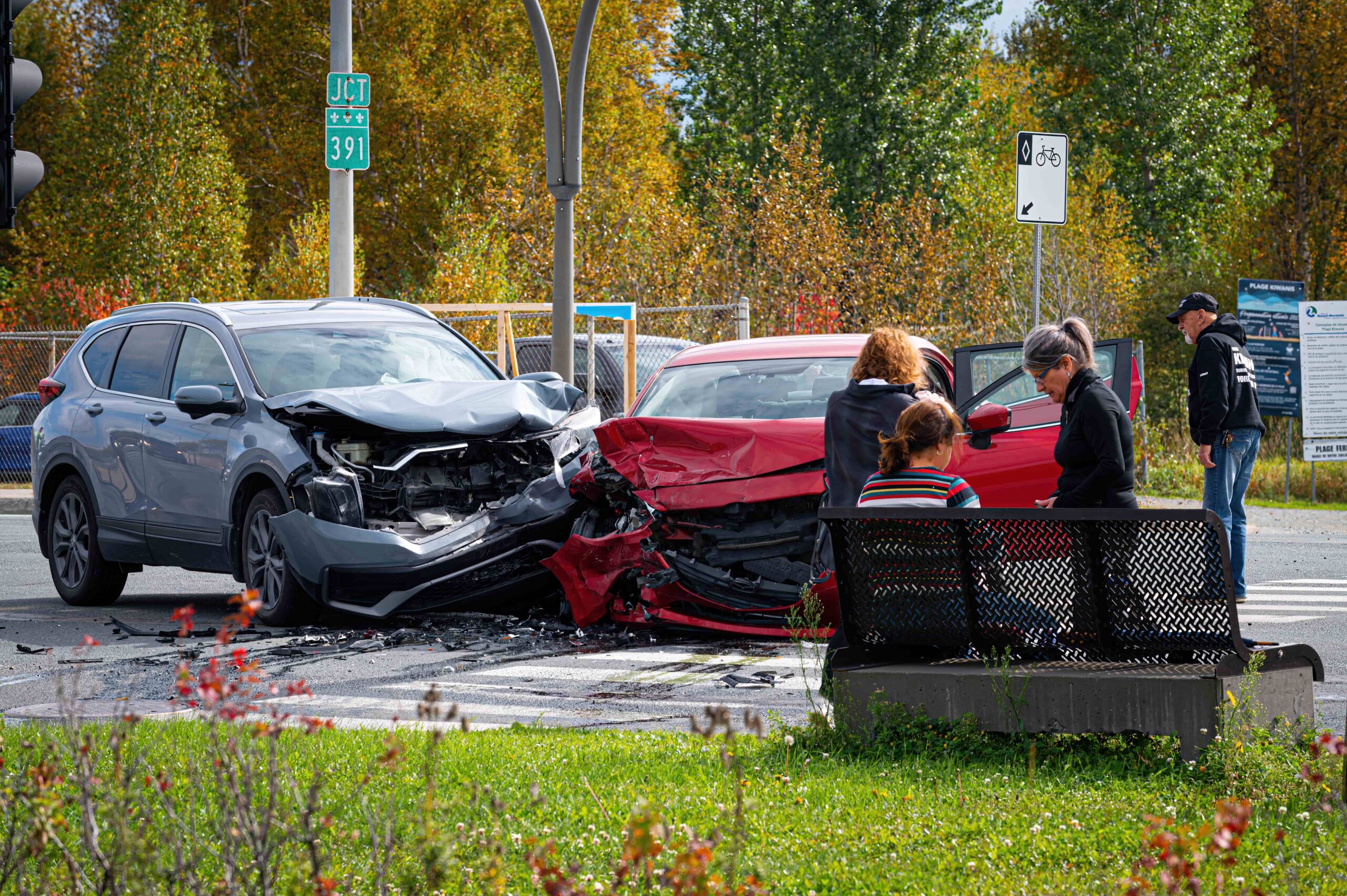
You may have a diminished value claim in Virginia when another driver caused the collision, your vehicle was repaired rather than declared a total loss, and the accident left it worth less than it was before.
En Averett contra Shircliff, Virginia’s Supreme Court has recognized that damages for a repairable vehicle may include both reasonable repair costs and the remaining depreciation after repair.
The law also defines “diminished value compensation” as money an insurer pays a third-party vehicle owner, in addition to repair costs, for a crash-related reduction in value.
The claim often involves:
- A newer vehicle
- Low or moderate mileage
- Significant body or structural damage
- Airbag deployment
- A substantial repair bill
- A luxury, performance, specialty, or limited-production vehicle
- No meaningful prior accident history
- Clear evidence that another driver caused the crash
A minor cosmetic repair to an older, high-mileage vehicle may produce little measurable loss. A newer vehicle with frame or structural repairs may show a much larger difference.
A total-loss claim works differently. When the insurer pays the vehicle’s pre-crash value rather than repairing it, there is no repaired vehicle left with a lower resale value.
How do you calculate diminished value after an accident in Virginia?
There is no single Virginia formula that determines every diminished value claim: Insurers may use formulas, while vehicle owners often rely on appraisals and market evidence.
The 17c formula
The 17c formula is a common method insurers use. It begins by limiting the potential loss to 10% of the vehicle’s pre-accident value. It then reduces that amount through multipliers based on the severity of the damage and the vehicle’s mileage.
The basic calculation is:
Pre-accident value × 10% × damage multiplier × mileage multiplier
The formula is associated with litigation that began in Georgia. It is not a rule that Virginia courts require you to use. Its main weakness is that it applies a 10% ceiling before considering how the market actually reacted to the accident. The damage and mileage multipliers can further reduce the estimate.
Consider a hypothetical $30,000 vehicle with moderate damage and 30,000 miles:
- Ten percent of $30,000 creates a base figure of $3,000.
- A damage multiplier of 0.50 reduces it to $1,500.
- A mileage multiplier of 0.80 reduces it again to $1,200.
Under that version of the formula, the estimated diminished value would be $1,200. That number may be accurate in some cases, but the formula does not examine actual dealer offers or sales of comparable vehicles with and without accident histories.
The appraisal-based method
A qualified vehicle appraiser can evaluate the vehicle, repair records, accident history, mileage, condition, options, and local market.
The appraiser may compare:
- The vehicle’s pre-accident market value
- Similar vehicles without accident histories
- Similar vehicles with reported collision damage
- Dealer trade-in offers
- The nature and cost of the repairs
- Structural or frame involvement
- Airbag deployment
- Remaining repair problems
Assume the same $30,000 vehicle receives a 17c estimate of $1,200. An appraiser might find that comparable clean-history vehicles sell for about $30,000 while similar repaired vehicles sell for $26,500.
That market-based analysis would support a claimed loss of $3,500 rather than $1,200. The numbers are hypothetical, but they show why the calculation method matters.
An appraisal is most useful when the likely difference is large enough to justify the fee and the appraiser can explain the valuation with credible market evidence. Paying for a costly report may not make sense when the vehicle is older or the expected loss is small.
¿Cómo se presenta un reclamo de valor disminuido en Virginia?
A diminished value claim usually goes to the at-fault driver’s liability insurer. You generally submit it after the repairs are complete, and you can measure how much value the vehicle has lost.
Start by gathering:
- The final repair estimate and paid invoices
- Photographs taken before and after the repairs
- Proof of the vehicle’s mileage and pre-accident condition
- A vehicle history report showing the reported collision
- Evidence of the vehicle’s pre-accident market value
- A diminished value appraisal or other market evidence, such as dealer offers and comparable listings
- The police report or other evidence showing who caused the crash
Next, send the insurer a written demand that identifies the claim, states the amount requested, and explains how you calculated the loss. Attach the supporting records instead of submitting only a dollar figure.
The insurer may accept the demand, ask for more information, deny the claim, or make a lower offer. Disputes often involve prior damage, mileage, repair quality, pre-accident value, or whether the appraisal reflects the local market.
Before signing a property-damage release, confirm whether it also resolves diminished value. A broad release may prevent you from seeking additional payment later.
Why choose Allen & Allen for a diminished value dispute?
Allen & Allen has represented injured Virginians since 1910, guided by integrity, respect, compassion, and trust. That history shapes how we handle every part of a car accident claim, including disputes over what a repaired vehicle is still worth.
Our commitment goes beyond providing routine legal representation. We take time to understand the financial impact of the crash, review the insurer’s position, and make your fight our fight when the available evidence supports a stronger claim.
We also work to ensure insurance companies treat you fairly and consider the full value of the losses caused by the accident. That’s what we mean when we say, “I am an Allen.”
FAQ for Virginia diminished value claims
Can you claim diminished value through your own insurance?
Diminished value claims are usually made against the at-fault driver’s liability insurer. Your own policy may apply in limited situations, such as an uninsured motorist claim, so review the coverage before assuming it does or does not pay.
What if the insurer denies or undervalues your claim?
If the insurer denies or undervalues your claim, ask for the reason in writing. Then provide stronger proof, such as an appraisal, dealer offers, repair records, or comparable vehicle listings.
How long do you have to file a diminished value claim in Virginia?
Virginia generalmente te da five years to file a lawsuit for vehicle property damage. Waiting can still make proving your claim harder as records and market data become less available.
Can you file a diminished value claim in Virginia for a leased vehicle?
The leasing company owns the vehicle and may hold the main right to recover diminished value. Review the lease and contact the owner before filing the claim yourself.
Is a diminished value payment taxable?
A payment generally is not taxable when it only reimburses you for lost property value and does not exceed your basis in the vehicle. Ask a tax professional about a large payment or unusual circumstances.
Get the answers you need
If you have questions about your diminished value claim, Allen & Allen can review the facts and explain your options. You can also learn more about how our Abogados de accidentes automovilísticos Richmond handle the insurance and damages issues that follow a crash.
For a free consultation, fill out our online form or call (804) 353-1200 to learn more about your diminished value claim.